Vitrified Diamond Wheels for Natural Diamond
- Bruting and polish of natural diamond on jewelry CNC grinders
- Diamond abrasive — not CBN, not for hardened steel
- MD20 to MD80 by stone size; rolling and polish wheels
- EOS, Adri, Discron, and similar machines — made to your stamp
Product Information
Overview
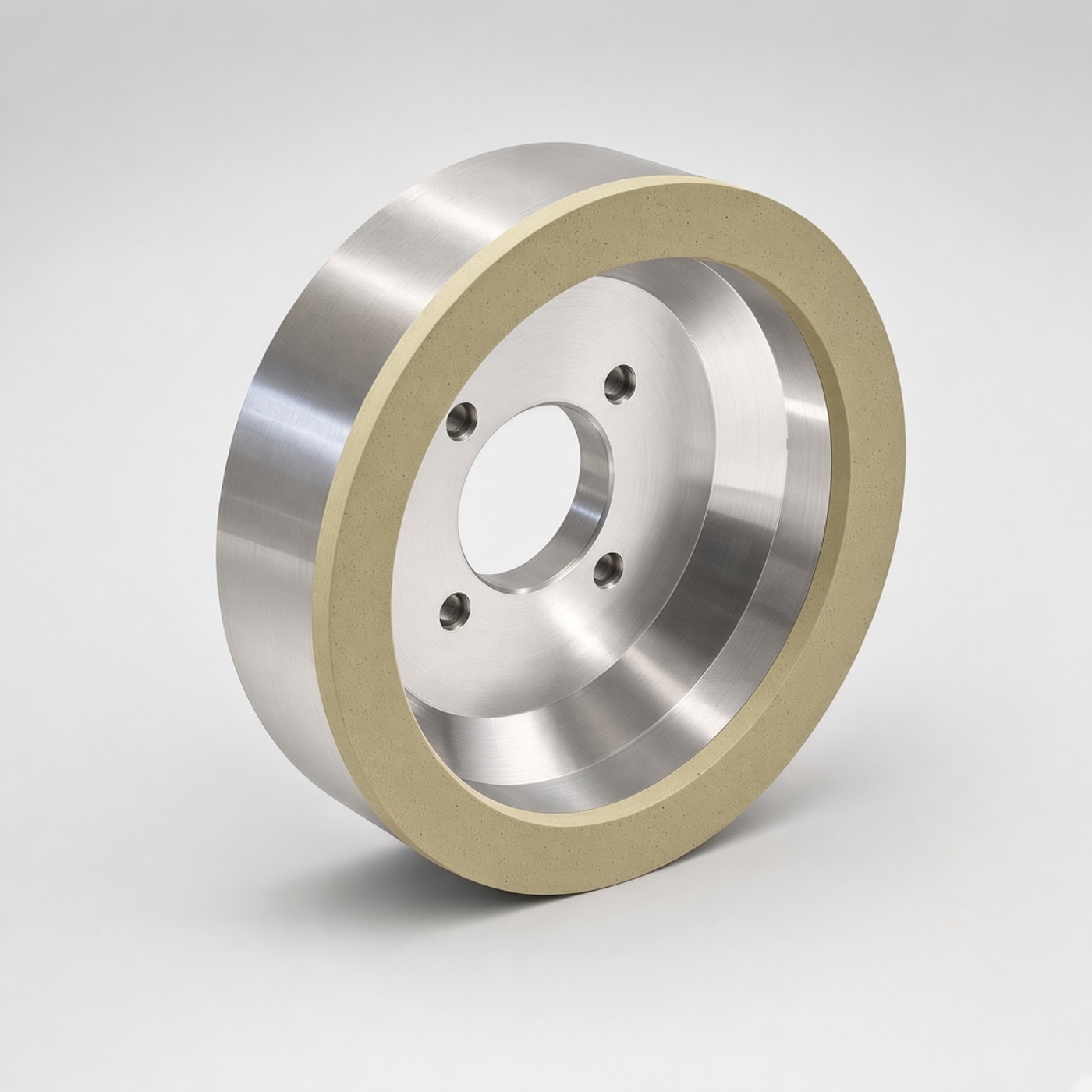
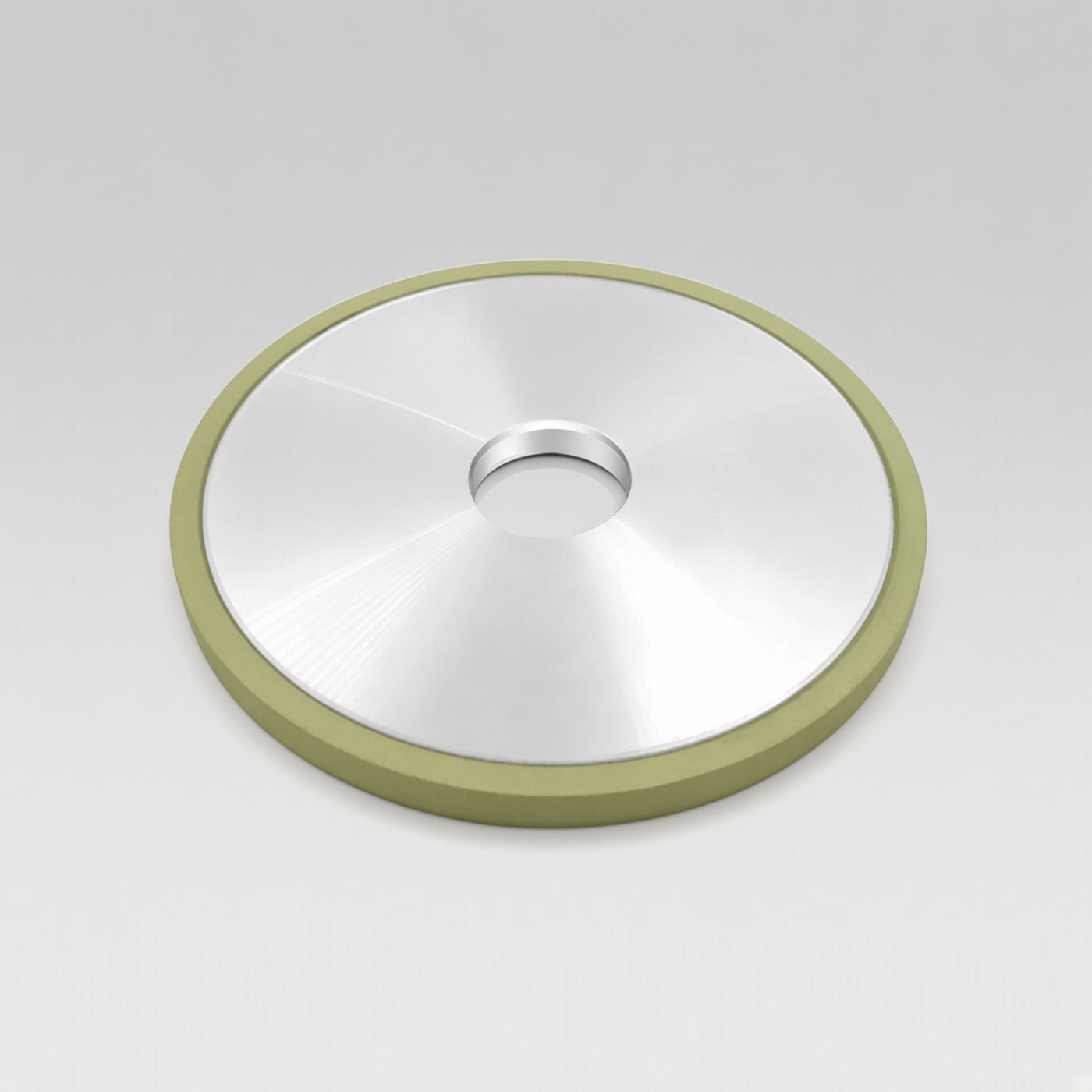
Vitrified diamond wheels for natural diamond — bruting (rolling) and polish on jewelry CNC grinders. Diamond in a porous ceramic bond. Shops run them where they would otherwise use a PCD wheel.
Rough from the mine is not a gem until it is planned, cleaved, bruted, polished, and inspected. These operations use a vitrified diamond grinding wheel on the rough-grind and polish seats — not CBN, not a steel wheel.
- Bruting / rolling wheels and polish wheels for natural diamond
- Also specified for gemstones, jewelry, and agate on the same class of machine
- Fits EOS, Adri, Discron, and similar CNC diamond grinders
- Dressable ceramic bond — form restored on the machine
Send the machine and the current stamp. We match diameter, hole, and grit.
Versus resin and metal
On natural diamond, a vitrified diamond wheel is the production spec. Resin and metal bond wheels are slower on this job.
- Throughput typically two to three times a resin or metal wheel on the same stones
- Less loading and less burn; the bond is porous and self-sharpening
- Easy to dress; the rim holds form through a run
- Wear is low relative to resin on diamond-on-diamond work
Carbide inserts and PCD-edged tools stay on vitrified diamond for carbide and PCD. Hardened steel stays on vitrified CBN. Not interchangeable.
Grit
Grit follows stone size. Ask for MD20, MD40, MD60, or MD80.
| Grit | Job | Typical stones |
|---|---|---|
| MD20 | Fine polish — gloss and wheel life | Small diamonds, about 0.10–1 ct |
| MD40 / MD60 | Coarse polish — sharp, high rate | About 1–1.3 ct |
| MD80 | Coarse polish — still higher rate | Larger stones, about 2–3 ct |
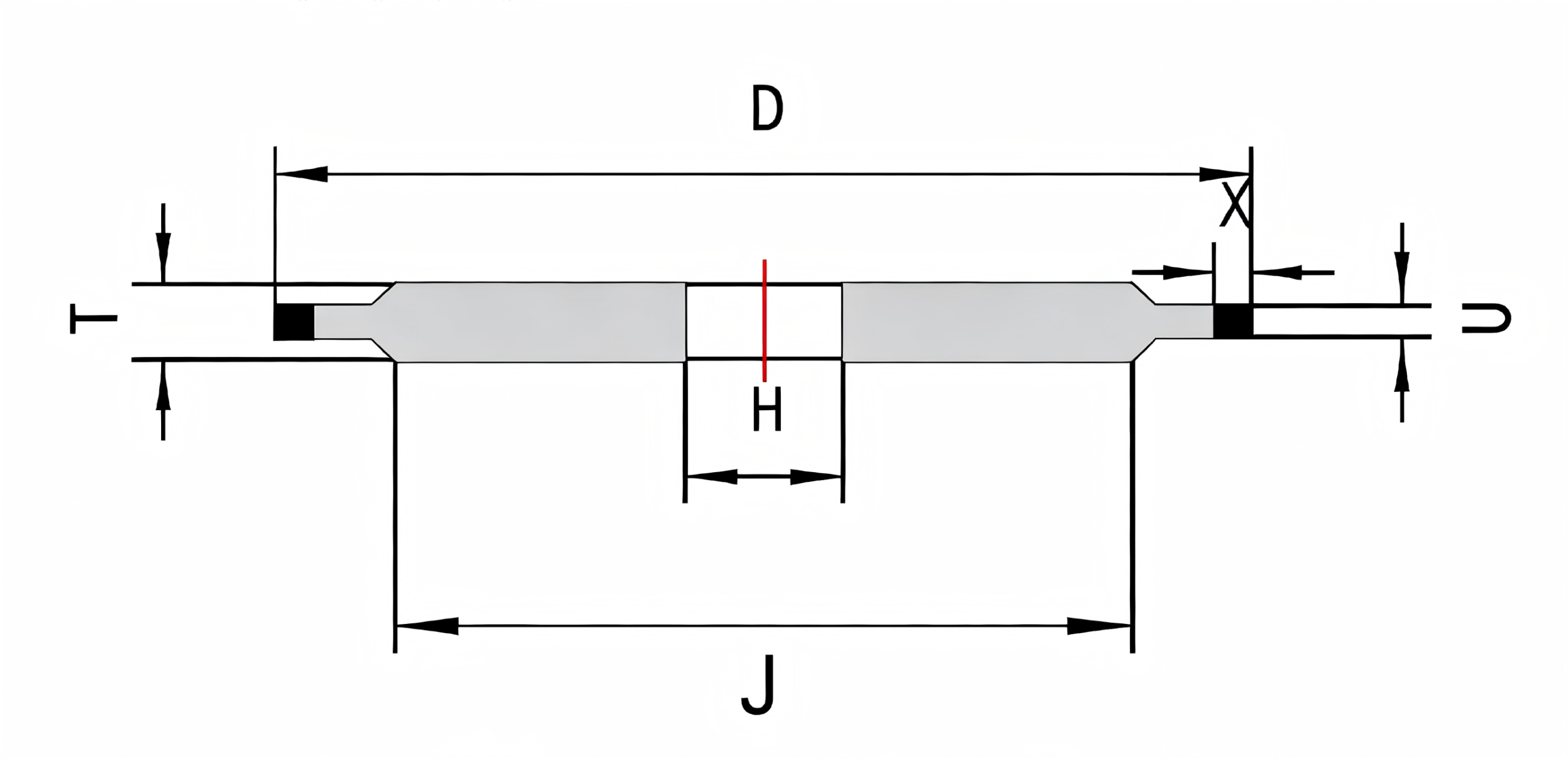
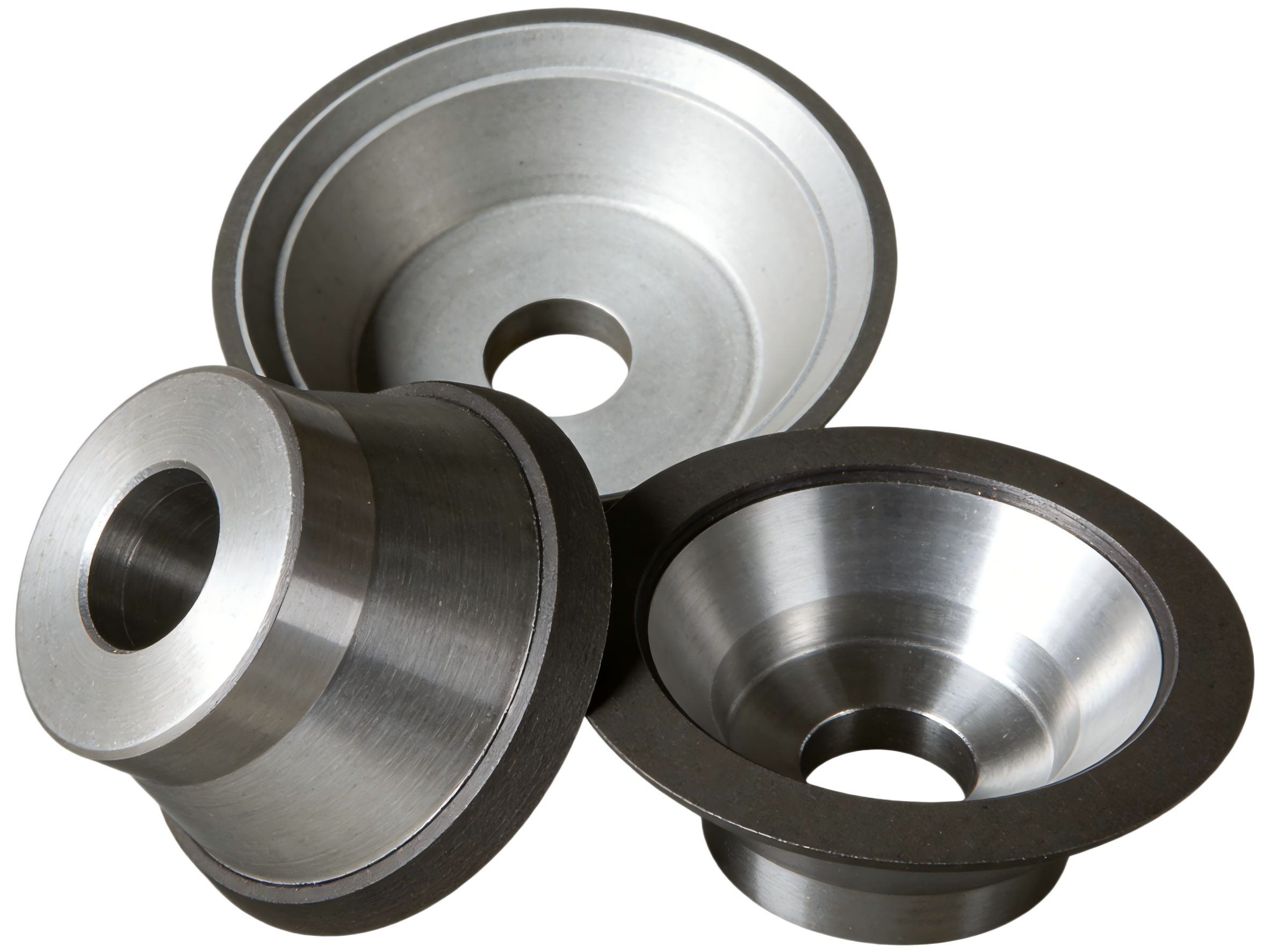
Shape follows the bruting or polish spindle. Send diameter, hole, and the mark on the wheel you run now.
When vitrified diamond for natural diamond is the wrong wheel
- Hardened steel, HSS, bearing rings → vitrified CBN
- Carbide inserts, solid carbide tools, PCD-edged tools → vitrified diamond for carbide and PCD
- Glass, quartz, stone, silicon wafers → metal bond
- Thin cut-off or a short-run plated form → electroplated